
Maternal intake and breastfeeding
So I’ve been trying to write this blog post for several weeks now. But a certain babe has kept me from having the free time and mental space to actually do it. 🙄Such is life right now…
When it comes to pregnancy and breastfeeding, there is a LOT of pressure put on moms to have the perfect diet in order to provide the best nutrition for their growing babies. But can I be honest? That’s way too much pressure for me to handle. Yes, during pregnancy and now breastfeeding I am providing all of the nutrition for my baby. But getting it “perfect” is just too much pressure for anyone and can create a lot of fear, guilt, or shame. Besides, the opinion on the optimal diet changes from one person to the next (sounds a lot like the rest of diet culture). During pregnancy I just focused on eating what I wanted, when I wanted it, and as much as I needed. I didn’t focus on certain macros or food groups. I trusted that my body would lead me towards what it needed to grow my baby.

And this is the perspective I have taken into breastfeeding. Sure, I focus on drinking enough water and eating enough food, but it’s not difficult for me since my body is constantly telling me to eat and drink. 😂 However, since I’m in this stage of life and there is a lot of well-meaning (but stressful) advice out there for breastfeeding mothers, I decided to look into the research about breast milk and how maternal diet impacts it. I hope you find this post helpful if you are in this stage of life! Also, this post is not to convince you to breastfeed your baby. I completely understand that this is not always feasible and believe that “fed is best.” Please do not let this post shame you if breastfeeding was not feasible for you or if you chose to use formula instead.
Here’s a little bit of background information on breast milk. First, it contains a variety of growth factors, hormones, enzymes, immune system factors, macronutrients (protein, carbs, and fat), and micronutrients (vitamins and minerals). It’s caloric content varies from the beginning of the feeding to the end of a feeding, feeding to feeding, and even day to day. Lactose (a type of carbohydrate) is the most abundant macronutrient and is the most stable between feedings and from mother-to-mother. Fat content is what creates the most variability in composition and caloric content. It is more concentrated as the feeding goes on and varies in type depending on number of pregnancies, when your baby was born, how far you are postpartum (our body uses up our reserves of a certain type of fatty acid), and the types of fats you are consuming. Although the vitamins and minerals present in breast milk are in smaller quantities than in formula, it is actually more easily absorbed and utilized in the body. Basically, breast milk is constantly changing based on a variety of factors.
How does one’s food intake impact the nutrition available in milk? Can we increase the fat or vitamin/mineral content available in our milk? Here’s what we know—mom’s diet has some effect on breast milk composition, but probably not as big of an impact as we would like to think (fortunately or unfortunately). Neither mom’s food intake nor body composition are going to impact carbohydrate or protein content in the milk. But research does show that there is a correlation between maternal fat intake and breast milk fat composition. It doesn’t impact how much fat is present, rather the type of fat present in the milk. Some people have fattier milk (and therefore more calorically rich milk) than other moms, but I didn’t find any research that definitively answered the question of why there is so much variability among moms. Fortunately, volume of milk is important for infant growth rather than amount of fat or concentration of calories. This means that if you are feeding your baby often enough, they are going to be well-fed, even if your milk is on the lower side of fat/calories. (takes off some of the pressure, right?) A major type of fat that is impacted by maternal intake is that of DHA, a type of omega-3 that is important for brain development. Because of this information, I had been focusing on eating more plant sources of omega 3s (walnuts, flax seed, etc), but found out that the conversion of omega 3s into DHA in reality is pretty poor from these sources. The best sources are actually from fatty fish or a supplement. My recommendation? Take a prenatal vitamin with DHA 😉 (and eat some seafood if you like it!).
When it comes to vitamins and minerals for milk, food intake of those nutrients obviously creates the availability of them for milk. But just as we don’t have to consume 100% of our daily needs each day for our body (nutrition status is about overall intake over several days, not just one meal or day), we don’t have to consume 100% of all the vitamins or minerals every day for it to be present in adequate amounts in our milk. Research shows that our milk is incredibly resilient despite inadequate intakes, and slowly decreases in milk if it is not readily available from our diet. If we are lacking in certain nutrients day after day, our bodies will then use our own body’s reserves to feed our babies. Once that is used up, our milk concentration of those nutrients will suffer.
I know that breastfeeding is touted as THE way to help new moms lose their baby weight. There is a lot of pressure for moms to quickly return to their pre-baby body, which often results in moms trying to reduce food intake and increase exercise along with breastfeeding to get rid of that weight. In reality, research doesn’t support this. Yes, there are some moms who lose weight breastfeeding, but there is a large majority of the population who don’t. It makes sense that our bodies would hold onto extra energy if they are having to constantly supply energy for another human. It’s self-preservation. And although our milk supply and composition are fairly resilient regardless of our food intake, if we are not consuming enough food, it IS going to impact our ability to feed our babies as well as our ability to take care of ourselves.

I find it really comforting and reassuring that I don’t have much control over my breast milk composition and nutrient quality. Let’s take the pressure off of ourselves! But that doesn’t give us the excuse to underfeed our bodies in an attempt to make them smaller. Breastfeeding takes a big toll on mother’s nutrition status and requires that we feed our bodies regularly and adequately (and again, I recommend a prenatal supplement). We want to have the energy to take care of our babes, the available nutrition for our own bodies to create proper brain chemistry (motherhood is hard enough without having a lack of serotonin from underfeeding our bodies!), and the brain space to fully be present rather than thinking/worrying about food all the time.
I’d love to hear from you what your favorite breastfeeding snacks are (the hunger is no joke…)!
Sources:
http://www.asklenore.info/breastfeeding/resources/mysteries.shtml
https://www.nap.edu/read/1577/chapter/1#xi
https://www.sciencedirect.com/science/article/pii/S0952327815000307

Savory butternut squash pasta
You know what I’ve been digging lately? Pasta. Growing up, we never really ate pasta. And then in my eating disorder days, pasta had too many carbs for my brain to feel safe with, so I rarely ever ate it. If I did, it had to have a ton of veggies in it so that I felt full with as few pasta noodles at possible (I originally put “pasta” here, haha). So really it was veggies with some noodles. I now realize how sad that is, because pasta is delish. As I found more freedom with food, we still never ate pasta because it wasn’t something I was accustomed to eating. But THEN! THEN we went to Italy and I had the most delicious pasta dishes ever. 😍I didn’t think I liked Italian food, but boy was I wrong! Real Italian food is the best thing ever. We could learn a thing or two from those genius Italians. :-)

So now, as I’m meal planning each week, we pretty much have some sort of pasta dish every week. It’s easy, versatile, and delicious. We’ve been experimenting with different types of sauces and meats, shapes of pasta, and pasta ingredients. Sometimes we have whole wheat pasta, other times white pasta from Italy, and others, Banza pasta. Banza pasta is made from chickpeas, so it’s naturally gluten free. I’ve tried a few gluten free pastas in my days, and they are NOT all created equal. 😳Although Banza’s pasta has a different texture than regular flour pasta, Isaac and I really like it! It’s nice and hearty and holds up well, unlike other mushy GF pastas. I also like that it adds variety to my food intake. We don’t eat a ton of beans, so this easily adds another food group into our weekly intake. And because it’s made with chickpeas, I don’t have to plan a meat in order for it to have protein. Because if you follow me, you know I’m all about having protein, carbs, fat, and fiber at my meals (yay for satisfaction and satiety). It also makes throwing together a quick meal easy when I don’t have a plan for dinner and don’t want to go get additional ingredients.

Banza thinks that most new years resolutions (which I don’t personally do) are too serious, too stressful, and too hard to stick to. And I completely agree. They also think that in order to enhance your health and life, you don’t have to make life worse. I’m gonna argue that if your new “health” behavior is making life more stressful and less enjoyable, then it probably isn’t actually healthy. As a result, their current campaign is #ResolveToEatMorePasta and that is a resolution I can get behind 🤓.
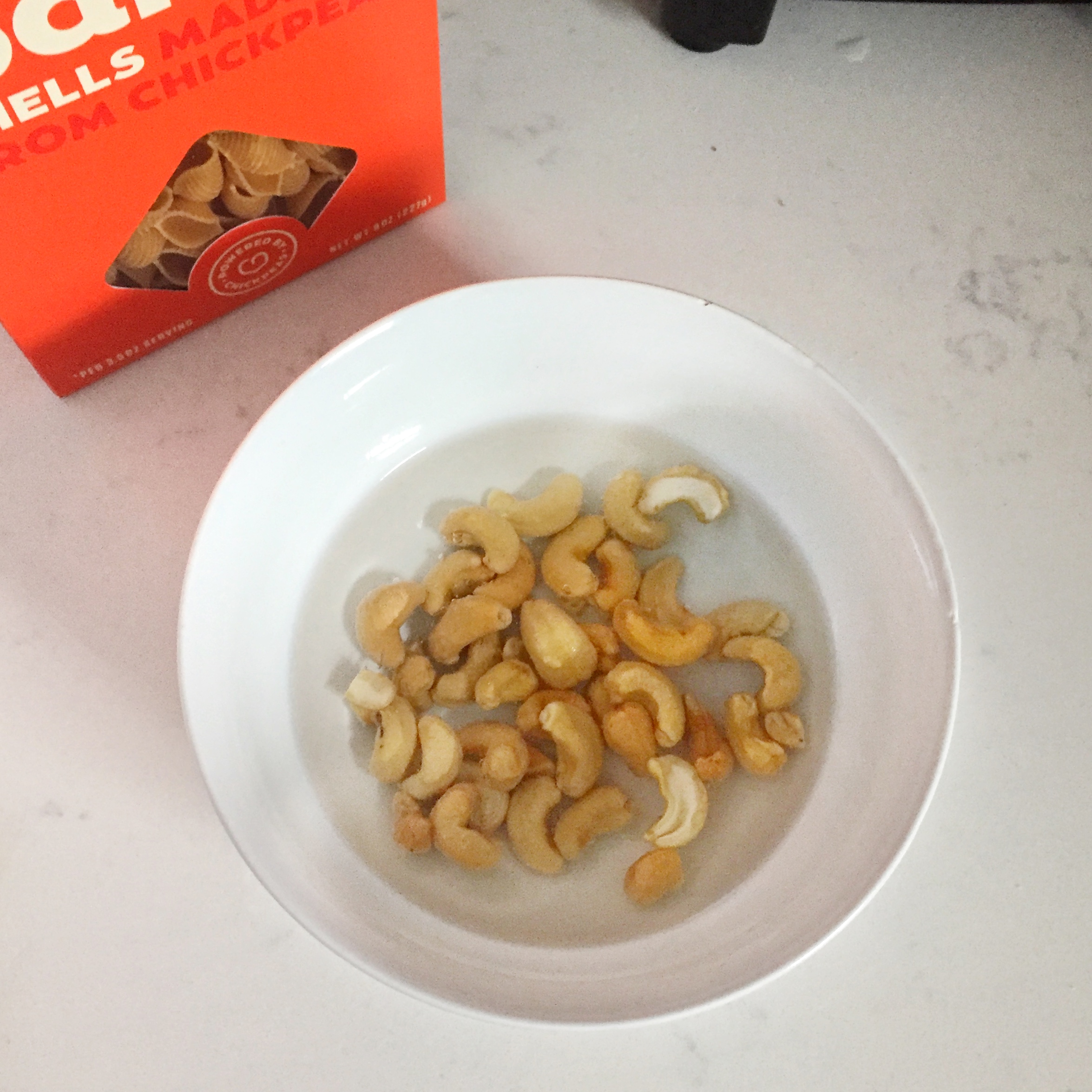
You can technically make this recipe with any pasta you prefer. And serve it with a meat of choice, if you like. We ate this one night with pre-cooked chicken sausage for more flavor and texture. Prep your veggies and bacon (the bacon is key for giving it a savory, smokey flavor 😍) and roast them until fork tender. Meanwhile, soak your cashews in water and boil your pasta. Once the veggies are done, puree them with the softened cashews, nutritional yeast (or cream cheese, if you prefer!), and enough chicken broth to create a smooth sauce. Mix with your cooked and drained pasta, and viola! You’ve got a delicious lunch or dinner that is packed full of nutrition and flavor. I’d love to hear what you think of it when you try it!

Also, this sauce is delicious, so you could totally just add more chicken broth to it to eat as a soup, or you could put it on other carbs like rice or spread on toast. :-)


I've got a secret to tell you...
I've got a secret that I've been keeping for awhile that I'm excited to finally let you in on.
These past few months have been pretty rough. Not emotionally rough, but physically. I've dealt with a lot of fatigue, nausea, high food aversions, an expanding wasteline, and general feelings of blehness...Yep...I'm PREGNANT!!

Tomorrow I will officially be 13 weeks and out of my first trimester. Phew!! You have no idea how glad I am that it is finally here. I'm FINALLY starting to feel more like myself, which is such a breath of fresh air. Who knew you could accomplish so much when you actually have energy and don't want to vomit?!?
We actually found out when I was only three weeks pregnant (um, say what?? how is that even possible? that's actually really only one week of being pregnant 😳). I was noticing some body changes (I think my chest size doubled overnight) and I had to pee ALL the time. Then when I didn't start my period, I thought something might be up. I took a dollar store test on Sunday, and when it was positive, rushed to the store to get a second. Sure enough, it was positive too! I cannot even describe how sweet Isaac was when I told him. He was ELATED! For the next few days every time he would look at me he would just smile and then come over and shower me in kisses. So precious. I'm not going to lie, it came as quite a surprise to me. And I freaked. Isaac and I knew we wanted to start a family in the near future, but I was training for "one last half marathon before having a baby" and wanted to have a full year of private practice under my belt before having a baby. But the Lord obviously had different plans, and I know that this child is going to be the best blessing ever.
So what has pregnancy been like for me? Like I said above, not super fun. I pretty much had nausea 24/7 from week 5-10 and am still dealing with it off and on. I'm such a pansy when it comes to having the stomach bug, and that's what it felt like for me all the time. I didn't want to do ANYTHING. I've taken a LOT of naps over the past few months. And there have been many nights where I've gone to bed with dirty dishes in the sink. Oh wait, it was that way before I got pregnant 🙈.

Y'all, it's CRAZY what happens to your body during pregnancy. I knew that we don't have much control over our bodies, but pregnancy has really magnified that for me and it's something that I'm having to learn to go with the flow with. Nausea and fatigue? Of course I knew of those. But heartburn in the first trimester?? And night sweats? Oh dear, what else do I not know about?!? 😳I am having to constantly learn my body as it changes from day-to-day and respond accordingly.
Which brings me to food. Food has been tricky. I went from being extremely nauseous and not wanting food to being extremely hungry (you know the hungry where you feel like you're gonna vomit? that kind of hungry) but still having major aversions. It made eating really difficult. And really unenjoyable. Guys, I have lived off asiago bagels for the past 7 weeks. I have had at least one a day because it's about the only thing that sounds good. I've also discovered quite a love for sweet tarts 😉. At first it was a little concerning that I didn't want a single vegetable (barf) and that the only things I thought I could stomach were white (or sour candies)--bread, tator tots, french fries, etc. But then I realized that it is no big deal. So I don't eat vegetables for 12 weeks! Not gonna kill me. I am so incredibly grateful that I have incorporated intuitive eating into my life, because without it, the last few months would have been incredibly stressful. I knew that at some point, I would want to eat vegetables and fruits again. I knew that I would want more fiber-rich foods. But I had to give my body time. And I am so grateful to say that I AM wanting some veggies now. I'm really grateful that I have been able to give my body what it needs when it needs it without second guessing how it is that I'm hungry 2 hours after eating breakfast. Or that I essentially want dinner leftovers as an evening snack. These past few months have been such a blaring example of how freeing intuitive eating is for me. It's hard to understand my ever-changing body, but I have given myself grace for the times when I haven't met its needs exactly (example: overshooting hunger and then going to bed and having acid reflux--unenjoyable for sure, but it doesn't mean I'm a failure).

My lifeline....

One half topped with avocado and pepitas, the other half with cream cheese, egg, and chicken sausage
As far as body image goes? If I'm 100% transparent, I was trying to come to terms with my body still changing before finding out about the pregnancy. So with pregnancy, I've experienced a lot of bloat and my waste simply getting thicker. It's been difficult not to have clothes that really fit my body. But I am learning to accept my rapidly changing body size/shape. My body is changing for incredibly good reasons--it's growing a human. But to be proactive, I bought this book after seeing that Kylie Mitchell read it during her pregnancy too. I've only read the first few chapters, but it's really nice to know I'm not alone in what I'm experiencing or feeling. It has also been super empowering to read. Guys, our bodies can accomplish so much and that is something to be thankful for and proud of!

Well, that's all for now! I plan on doing some pregnancy updates in the future. I don't really know what my fall will look like or the months after having baby, but I'm just going to take it one day at a time.
Caio!!