The Dangers of the New WW Kurbo App
Dear parent, I know you want the best for your child—that you want your child to be healthy and happy and thriving. So I beg you, if you genuinely want your child to be healthy and to set your child up for success when it comes to navigating food and body concerns as well as mental wellbeing, please do not put your child on a diet or encourage the use of a weight loss app. For those of you who aren’t aware, @ww recently came out with an app for kids ages 8-17 to track food. This app uses a stoplight system to rank foods—green, yellow, and red. I have SO SO many issues with this app as a dietitian and someone who work with clients with food and body struggles. This app is unethical and dangerous. Here are a few of my issues:
1. This app targets kids during a time when they are *supposed* to be gaining weight (swipe over for the charts). For example, clinical recommendations for weight gain during the ages of 8-18 for a boy who has been on the 50th percentile is 100 lbs and for a girl is 85 lbs (you can see that during teenage years it is 50 lbs and 25 lbs, respectively.) We are pathologizing something that is completely healthy and normal—creating shame and guilt. Your child needs to grow out before he/she can grow up.


2. Only one of the “health coaches” listed on their site has a degree in nutrition, the rest have backgrounds in communications, political economy, tourism, etc. I’m not knocking their degrees, they simply don’t have the education background I believe is necessary for helping coach children in the area of food nutrition (FYI, an RD has at least 4 years of school plus an internship and national board exam. Some of us also have a master’s degree too).
3. Kids think in black and white and this app could easily lead kids to viewing food as “good” and “bad” and we simply know that food nutrition is not this simple—there is a lot of nuance. This good/bad mentality causes so much anxiety, guilt, and shame. Eating a “bad” food then makes you “bad” and alternatively, eating a “good” food makes you “good.” I don’t know about you, but I don’t want my children gauging their morality based off of their food intake.
4. From the little bit I’ve seen (I will acknowledge I have not downloaded the app), it appears mainly fruits and veggies are green, lean proteins and grains are yellow, and pretty much anything high in calories is red. This way of viewing food simply in terms of calories is completely ignoring nutrition. Yes, fat is high in calories, but also so so important for our bodies as well as for fullness and satisfaction. Fruits and veggies are important for our health, but I have plenty of clients who used to eat mainly fruits and veggies and they can report they feel WAY better eating a wider variety of foods (the GI system can only handle so much fiber haha). Hummus, applesauce, etc should NOT be considered a red food, and yet they are on the app.

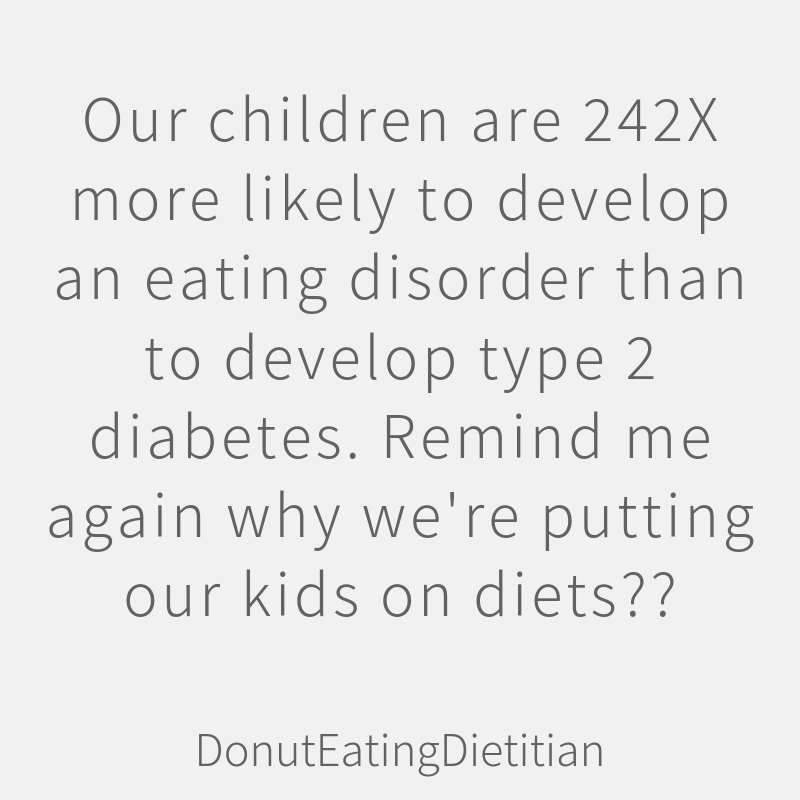
5. Dieting is a huge predictor/trigger for disordered eating and eating disorders. 1 in 4 people who go on a diet develop an eating disorder. Guys, this is a staggering statistic. ONE in FOUR. Your child has a greater risk of developing an eating disorder than type 2 diabetes. This is the biggest reason I cannot get behind an app like this (or WW allowing teenagers to join) or any form of dieting. I have personally experienced an eating disorder and work with clients every day who are working hard to overcome their struggles with food so that they can live a rich and full life. Eating disorders are dangerous (they have the highest mortality rate of all mental disorders) and strip away everything important to the people who struggle with them.
6. The app and WW can claim that it’s a lifestyle plan, but they talk all about BMI and weight and have before and after pictures. This is about weight, not health. The Academy of Pediatrics clearly states that children should NOT be put on a diet. If they genuinely care about health, this app would be altogether different and there would be no talk of weight or before or after pictures.
7. Speaking of before and after pictures—this creates the idea that the before was less than the after. These children are valuable regardless of their body size or the way they look. Putting children on diets only tells them that their body is a problem that needs to be fixed, bringing me back to point number 1 and 5.
This app is problematic on so many different levels. I’ve heard the National Eating Disorder Association released an official statement on the dangers of this app (along with many other health professionals) and yet WW has not taken it off the market. Let’s be honest, they don’t care about the health of your children, they care about their bottom line. So please, please do not allow your children to use this app. And comment below if you have questions or concerns--I am open to respectful dialogue. Share this and other articles with your parent friends. And if you are interested, sign this petition to get it removed http://chng.it/kwqzFnsJ8D
Snack Ideas
I apologize because it’s been FOREVER since I’ve posted on here. I could say that I’m far too busy taking care of a baby and seeing clients, but really it ultimately comes down to intention. Blogging takes work and time—something I don’t always want to invest 🤪. I do NOT understand how some bloggers post multiple times a week (or even some, every day!!). Major props to those people.
I get questions about snack ideas, so I thought I would compile a list of ideas for you. Please remember that ANY food can be a snack food. There are no rules about what “counts” as a snack versus a meal or dessert. YOU get to decide what you want to eat whenever you get hungry. The purpose of a snack is simply to get you through until your next meal without getting overly hungry. So what and how much you choose depends on when your next meal is, how long it’s been since you last ate, and what you last ate. If it’s been 3 hours since I last ate and I still have 2 more hours until my husband gets home for dinner, I’m going to eat a much more substantial snack than if I only have 30 more minutes until meal time (and yes, I will eat a snack even if dinner is in 30 minutes. Hanger can hit in 30 minutes). Or a night time snack typically isn’t as substantial because I’m not as hungry from having dinner somewhat recently.
But guys, you do what works best for YOU! Use this list simply as an idea—the amount is up to you. And if you’re wondering, yes, I typically aim for a carb and fat/protein at each snack to help with satiety and blood sugar stabilization.
So here you go! And if you notice a lot of peanut butter references, really everything I eat is just a vehicle for peanut butter. 😉
This granola (I actually half the amount of nuts, but you do you) with milk and banana slices

Cheese, turkey, and crackers…I HIGHLY recommend Aldi’s "specialty select” rosemary scalloped crackers with their goat cheese. Aldi is the place to go for yummy and affordable cheeses.

Muffin or slice of bread with nut butter or butter. Every week I make a baked goodie or two. Here’s my current favorite pumpkin banana bread, vegan banana bread (with chocolate chips added, duh) , almond flour banana bread, apple crumble snack bars

Leftover pancake with nut butter and banana (you can find my whole wheat pancake recipe here)
Yogurt parfait (use full fat yogurt, trust me) with yogurt, fruit, and granola or nuts…I personally LOVE the Green Mountain Top Creamery 5% plain yogurt with honey and peanut butter mixed in.
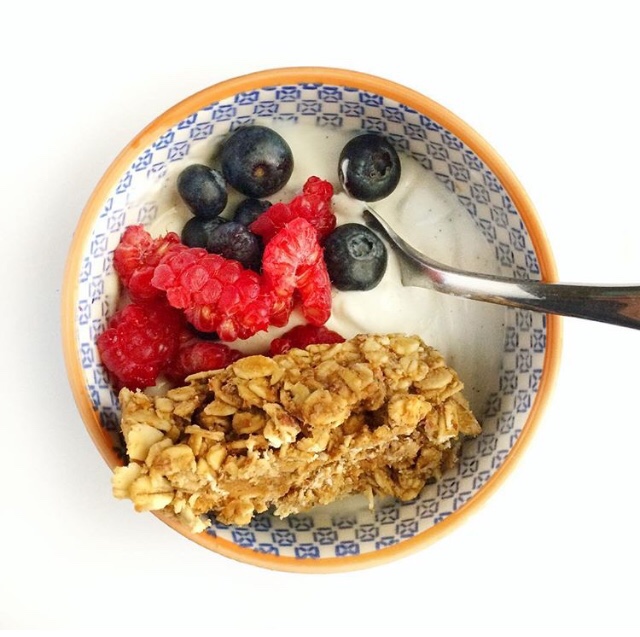
Cottage cheese + fruit
Fruit + cheese stick
Dinner leftovers (this is great when you don’t have enough leftovers for a full meal)

Gosh, I love Papa Murphy’s pizzas….
Toast with avocado and egg or deli meat
Baked good—cookie, piece of cake, brownie, etc. I’ve shared before, but these brownies are bomb…

Protein or granola bar + fruit (a few of my favorite brands are RX bars, Perfect Bars, Nature Valley granola, Luna peanut butter protein, Clif peanut butter, KIND nut ones)
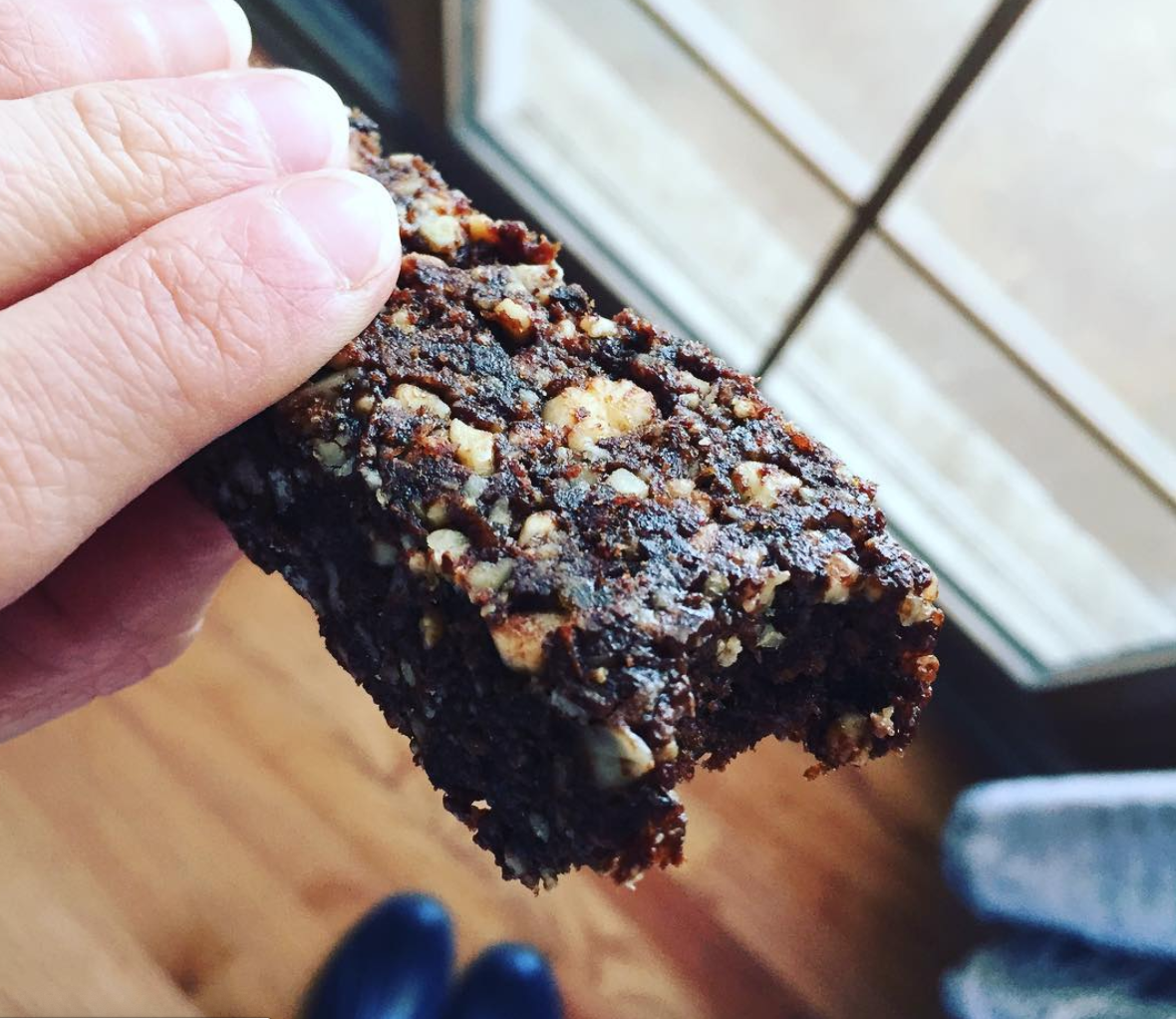
Homemade lara bars…
Smoothie that has some sort of protein powder or nut butter for some staying power
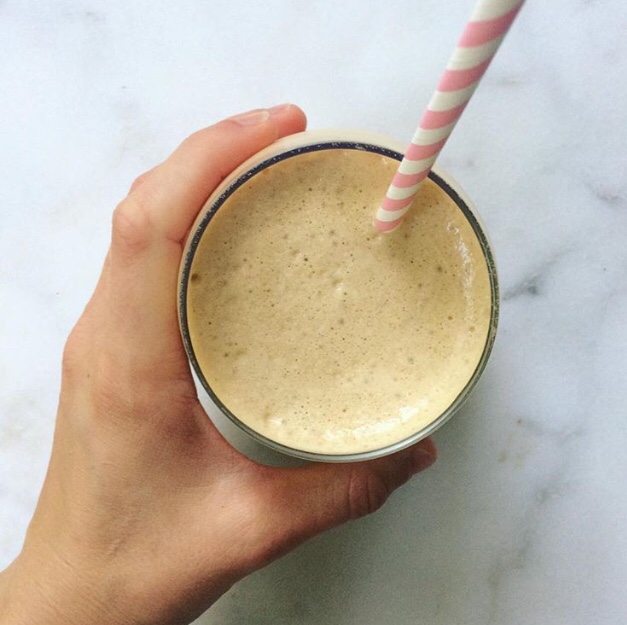
Coffee smoothie (cold brew, frozen banana, date) with collagen peptides.
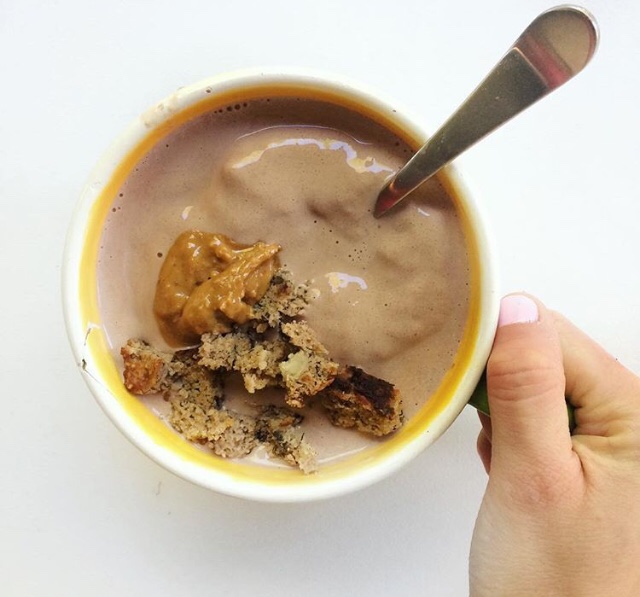
Juice plus chocolate powder with banana, peanut butter, milk, and ice topped with more peanut butter and banana bread crumbles.
Leftover roasted veggies + cottage cheese
Popcorn + nuts/cheese
Hope this gives you some inspiration. I’d love to hear what snacks YOU enjoy!!

Maternal intake and breastfeeding
So I’ve been trying to write this blog post for several weeks now. But a certain babe has kept me from having the free time and mental space to actually do it. 🙄Such is life right now…
When it comes to pregnancy and breastfeeding, there is a LOT of pressure put on moms to have the perfect diet in order to provide the best nutrition for their growing babies. But can I be honest? That’s way too much pressure for me to handle. Yes, during pregnancy and now breastfeeding I am providing all of the nutrition for my baby. But getting it “perfect” is just too much pressure for anyone and can create a lot of fear, guilt, or shame. Besides, the opinion on the optimal diet changes from one person to the next (sounds a lot like the rest of diet culture). During pregnancy I just focused on eating what I wanted, when I wanted it, and as much as I needed. I didn’t focus on certain macros or food groups. I trusted that my body would lead me towards what it needed to grow my baby.

And this is the perspective I have taken into breastfeeding. Sure, I focus on drinking enough water and eating enough food, but it’s not difficult for me since my body is constantly telling me to eat and drink. 😂 However, since I’m in this stage of life and there is a lot of well-meaning (but stressful) advice out there for breastfeeding mothers, I decided to look into the research about breast milk and how maternal diet impacts it. I hope you find this post helpful if you are in this stage of life! Also, this post is not to convince you to breastfeed your baby. I completely understand that this is not always feasible and believe that “fed is best.” Please do not let this post shame you if breastfeeding was not feasible for you or if you chose to use formula instead.
Here’s a little bit of background information on breast milk. First, it contains a variety of growth factors, hormones, enzymes, immune system factors, macronutrients (protein, carbs, and fat), and micronutrients (vitamins and minerals). It’s caloric content varies from the beginning of the feeding to the end of a feeding, feeding to feeding, and even day to day. Lactose (a type of carbohydrate) is the most abundant macronutrient and is the most stable between feedings and from mother-to-mother. Fat content is what creates the most variability in composition and caloric content. It is more concentrated as the feeding goes on and varies in type depending on number of pregnancies, when your baby was born, how far you are postpartum (our body uses up our reserves of a certain type of fatty acid), and the types of fats you are consuming. Although the vitamins and minerals present in breast milk are in smaller quantities than in formula, it is actually more easily absorbed and utilized in the body. Basically, breast milk is constantly changing based on a variety of factors.
How does one’s food intake impact the nutrition available in milk? Can we increase the fat or vitamin/mineral content available in our milk? Here’s what we know—mom’s diet has some effect on breast milk composition, but probably not as big of an impact as we would like to think (fortunately or unfortunately). Neither mom’s food intake nor body composition are going to impact carbohydrate or protein content in the milk. But research does show that there is a correlation between maternal fat intake and breast milk fat composition. It doesn’t impact how much fat is present, rather the type of fat present in the milk. Some people have fattier milk (and therefore more calorically rich milk) than other moms, but I didn’t find any research that definitively answered the question of why there is so much variability among moms. Fortunately, volume of milk is important for infant growth rather than amount of fat or concentration of calories. This means that if you are feeding your baby often enough, they are going to be well-fed, even if your milk is on the lower side of fat/calories. (takes off some of the pressure, right?) A major type of fat that is impacted by maternal intake is that of DHA, a type of omega-3 that is important for brain development. Because of this information, I had been focusing on eating more plant sources of omega 3s (walnuts, flax seed, etc), but found out that the conversion of omega 3s into DHA in reality is pretty poor from these sources. The best sources are actually from fatty fish or a supplement. My recommendation? Take a prenatal vitamin with DHA 😉 (and eat some seafood if you like it!).
When it comes to vitamins and minerals for milk, food intake of those nutrients obviously creates the availability of them for milk. But just as we don’t have to consume 100% of our daily needs each day for our body (nutrition status is about overall intake over several days, not just one meal or day), we don’t have to consume 100% of all the vitamins or minerals every day for it to be present in adequate amounts in our milk. Research shows that our milk is incredibly resilient despite inadequate intakes, and slowly decreases in milk if it is not readily available from our diet. If we are lacking in certain nutrients day after day, our bodies will then use our own body’s reserves to feed our babies. Once that is used up, our milk concentration of those nutrients will suffer.
I know that breastfeeding is touted as THE way to help new moms lose their baby weight. There is a lot of pressure for moms to quickly return to their pre-baby body, which often results in moms trying to reduce food intake and increase exercise along with breastfeeding to get rid of that weight. In reality, research doesn’t support this. Yes, there are some moms who lose weight breastfeeding, but there is a large majority of the population who don’t. It makes sense that our bodies would hold onto extra energy if they are having to constantly supply energy for another human. It’s self-preservation. And although our milk supply and composition are fairly resilient regardless of our food intake, if we are not consuming enough food, it IS going to impact our ability to feed our babies as well as our ability to take care of ourselves.

I find it really comforting and reassuring that I don’t have much control over my breast milk composition and nutrient quality. Let’s take the pressure off of ourselves! But that doesn’t give us the excuse to underfeed our bodies in an attempt to make them smaller. Breastfeeding takes a big toll on mother’s nutrition status and requires that we feed our bodies regularly and adequately (and again, I recommend a prenatal supplement). We want to have the energy to take care of our babes, the available nutrition for our own bodies to create proper brain chemistry (motherhood is hard enough without having a lack of serotonin from underfeeding our bodies!), and the brain space to fully be present rather than thinking/worrying about food all the time.
I’d love to hear from you what your favorite breastfeeding snacks are (the hunger is no joke…)!
Sources:
http://www.asklenore.info/breastfeeding/resources/mysteries.shtml
https://www.nap.edu/read/1577/chapter/1#xi
https://www.sciencedirect.com/science/article/pii/S0952327815000307