
Guest Post: Improve Your Mental Health With These Six Self-Care Habits
Hello everybody!! Today's post is a little different than normal, because I am have a guest! Brad Krause, from Self-Caring, reached out to me wanting to write a blog on the importance of self-care and how to incorporate it into everyday daily life. And since I'm really big on truly taking care of ourselves, I thought it would be great for him to share.
Brad graduated from college in 2010 and went straight to the corporate world at the headquarters of a popular retail company. But what started as a dream job soured quickly. After four years of working 15-hour days and neglecting his health, he decided enough was enough. Through aiding a friend during a tough time, Brad discovered his real calling--helping people implement self-care practices that improve their overall wellbeing. He created selfcaring.info to share his own knowledge and the many great resources he finds on his self-care journey. Hope you enjoy his article! I'd love to hear any self-care practices you have!

“Rest and self-care are so important. When you take time to replenish your spirit, it allows you to serve others from the overflow. You cannot serve from an empty vessel.” -Eleanor Brownn
The old Sermon on the Mount command goes “do unto others as you would have them do unto you.” In other words, treat others like you wish to be treated. Self-care, a critical part of your mental health and well-being is taking that adage and turning it upside down. Instead of waiting for others to do unto you, you do unto yourself by prioritizing you.
Sounds simple right?
Not so fast. Identifying your own needs and making the time to take care for them is an often-overlooked practice.
Here are six self-care habits that will help you get started.
1. Make Sleep A Priority
Numerous studies have shown that even the most minimal sleep disruptions can result in a significant effect on one’s mental health, so finding ways to improve your sleep is important. According to the Mayo Clinic, there are six key ways to improve your sleep.
1. Follow a sleep schedule. Go to bed at the same time every night and stick to a maximum of eight hours of sleep each night.
2. Watch what you eat and drink. You shouldn’t feel hungry or full at bedtime and be sure to avoid caffeine for several hours before rest.
3. Create the perfect sleeping environment. Make sure your room is dark, cool and quiet.
4. Nap wisely. Don’t take a nap longer than 30 minutes and never take a nap in the later part of the day.
5. Get moving. Exercise improves sleep.
6. Eliminate worrying. Handle worries long before bedtime.
2. Make Time For Relaxation
With work deadlines, carpool demands and social plans, it’s easy to get caught up in a schedule that doesn’t permit you the proper time to unwind. To protect your mental health, though, it’s important to make time and to employ creative ways to relax; you can manage this in just five minutes.
3. Learn The Art Of Saying “No”
Are you a people pleaser, always feeling obligated to say “yes” to every request? If so, it’s time to change and there’s several good reasons you’ll want to.
● People that say no are typically more successful.
● There’s value in realizing you’re not responsible for someone else’s reaction.
● It’s important to establish personal boundaries.
4. Get Physical
One of the most tried and true remedies to improve your mental health is introducing yoga or meditation into your regular routine. If you’re suffering from depression, anxiety or in addiction recovery these practices are proven to help. Here are some benefits.
● Increased self-awareness
● Increased energy levels
● Emotional healing
● Improved sleep
● Increased strength
● Reduces fatigue
5. Eliminate The Stress Addiction
According to a survey by NPR and Harvard Health, 63 percent of Americans feel stressed, and of those, a quarter reported feeling a “great deal” of stress. For some, stress even becomes an addiction. If you’re complaining a lot, finding yourself without any free time, dealing with relationship struggles, unhappy, and overworking in the present to payoff for the future these are signs you might be dealing with an addiction to stress. Here are some ways to break the habit:
● Stop overscheduling
● Unplug
● Practice relaxation techniques
● Surround yourself with positive influences and friends
● Make your happiness a priority
6. Take Up A New Hobby
One of the unique ways to eliminate stress or replace negative habits such as addiction is to find a passion for something that creates positive experiences in your life. Consider getting creative with one of these hobbies:
● Playing an instrument
● Cooking
● Volunteering
● Journaling
● Cooking
● Woodworking
● Gardening
● Photography
● Coloring
● Knitting/Sewing/Crochet
It’s important to remember that self-care should not be seen as selfish or self-indulgent. Instead, self-care should be seen as taking ownership for making you the best you can be. You’ll see improvements in self-esteem, relationships, work performance and almost all facets of your life. Start today by setting aside some special “me time.” We’re confident you’ll see improved mental health in no time.

Dear parent Of a child in eating disorder recovery: please don’t go on a diet
Dear parent, I have been seeing your child—both adolescent and adult—for the past few months for recovery from an eating disorder. We have been doing a lot of work together to introduce all types of foods in adequate amounts at regular times throughout the day. We’ve challenged many different food rules that have gotten in the way of your child being able to truly listen to their body and take care of it well. We’ve challenged fears around foods that are seen as “unhealthy” or might promote weight gain. We’ve worked on incorporating foods that they like regularly so that they feel competent around all foods. We have even worked on learning to accept their body’s natural size instead of fighting it and hating it. Your child has been making so much progress, but recently I’ve noticed a difference in your child’s anxiety around food and increase in the need to restrict quantities or types of foods. I’ve noticed your child go back to old behaviors that we’ve been working hard to decrease. And then I discovered what might be playing a role in that.

Your child told me that recently you chose to go on a diet (or “lifestyle change”) that includes cutting out some food group or macronutrient, eating only certain portion sizes, watching what you eat, or starting up a vigorous exercise routine. I get it—just as there are enormous pressures for your child’s body to look a certain way, there are enormous pressures for your body to look a certain way. You have been told that health is certain size and that you are more valuable at a smaller size. I know that your intentions are pure. But here’s the problem, it feels like complete hypocrisy for your child to be told that he or she can’t diet while you can. When she sees you dieting and pursuing a smaller body, she receives the message that restricting and getting smaller is something to be valued and pursued. The one thing she thinks makes her most important or allows her to best cope, she’s not allowed to do. She receives the message that certain foods are bad or unhealthy, and that she should avoid them. She receives the message that she shouldn’t trust herself around food. I know that your new eating style seems innocent enough or you may even think you’re hiding it, but you’re not. Your child notices when you leave the bun off your burger. Your child notices when you skip on dessert every time while the rest of the family is eating it. Your child notices when there are no “fun foods” in the cabinets or when there are “healthy” food replacements in the fridge. Your child is hyperaware of every bite that goes into her body and yours. Unfortunately, your diet is brining feels of jealousy, inadequacy, guilt, and shame because your child is “less than” for no longer trying to change her body or restrict her food intake.
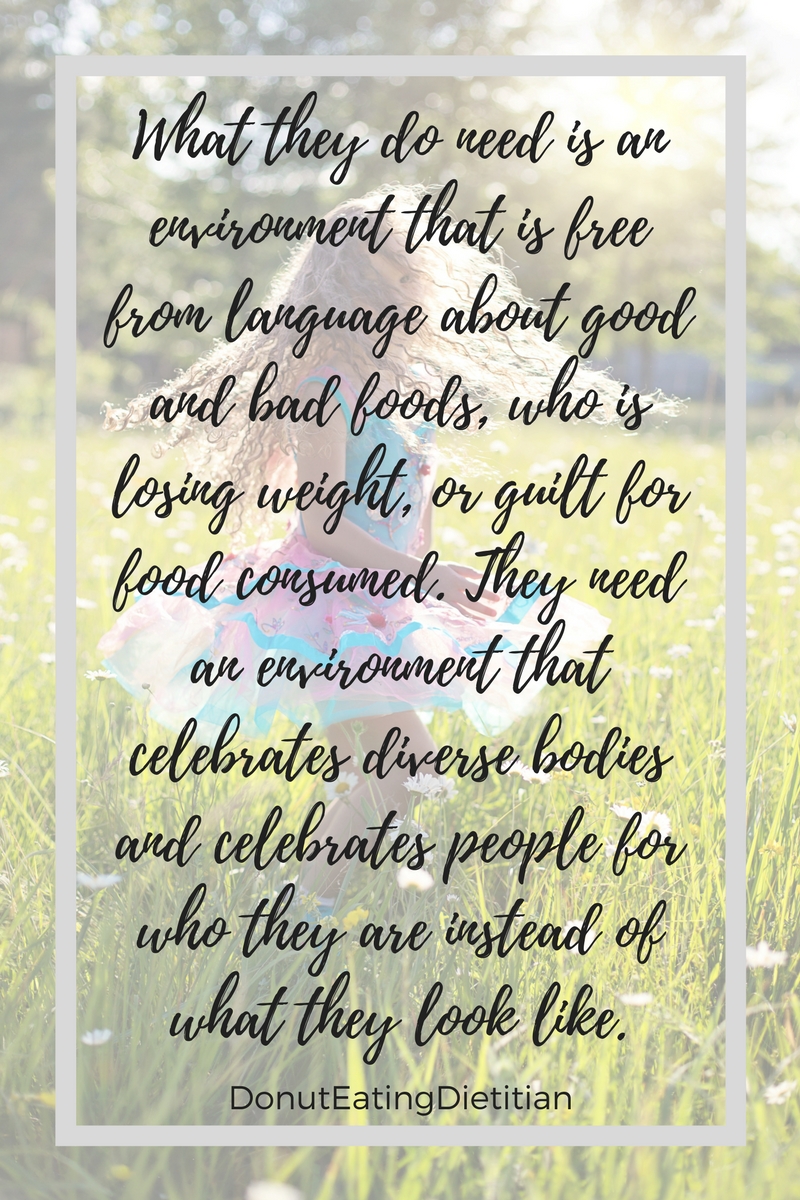
What your child really needs is an environment where food freedom and flexibility is encouraged. They need support at meal times to eat scary foods or scary amounts of foods. Eating food with someone is a lot easier than eating it alone. It gives them a sense of permission if you’re doing it as well. I’m not saying that you have to eat every meal with them or match their intake, because they do need to learn to take care of their own needs, which are different from everyone else’s around them. What they do need is an environment that is free from language about good and bad foods, who is losing weight, or guilt for food consumed. They need an environment that celebrates diverse bodies and celebrates people for who they are instead of what they look like.
Parents, I don’t want this letter to be condemning or shame-inducing. I don’t think you’re a bad parent for doing what everyone in our culture says is normal. But I do want you to see how your behaviors are impacting your child’s recovery. Home is place that should be the safest for your child to recover and I want you to be able to connect that environment with an environment that is free from weight loss pursuit. Please put aside your desire for weight loss and instead foster an environment where your child is fully supported for recovery—I promise, you’re child’s recovery is worth every “extra” pound.
*I mainly used the pronoun she, but know that I do not believe eating disorders only occur for females. I do not want to promote the belief that eating disorders only occur in females because it is a growing problem in the male population as well.
**If you struggle with knowing how to support a family member struggling with an eating disorder, check out the Parent Toolkit by NEDA, or schedule an appointment with your child’s therapist or dietitian to talk through how you can support them.
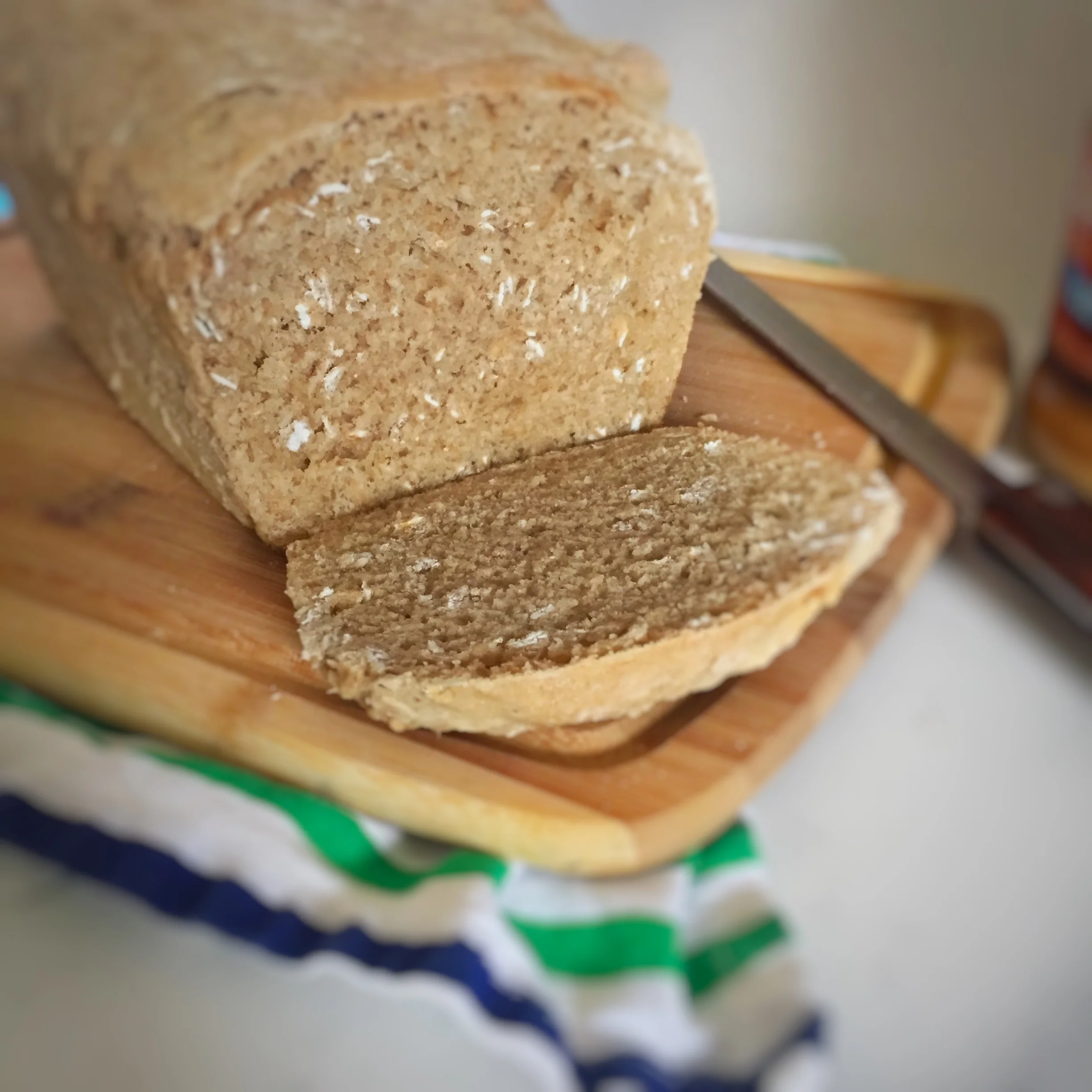
Homemade Maple Oatmeal Bread
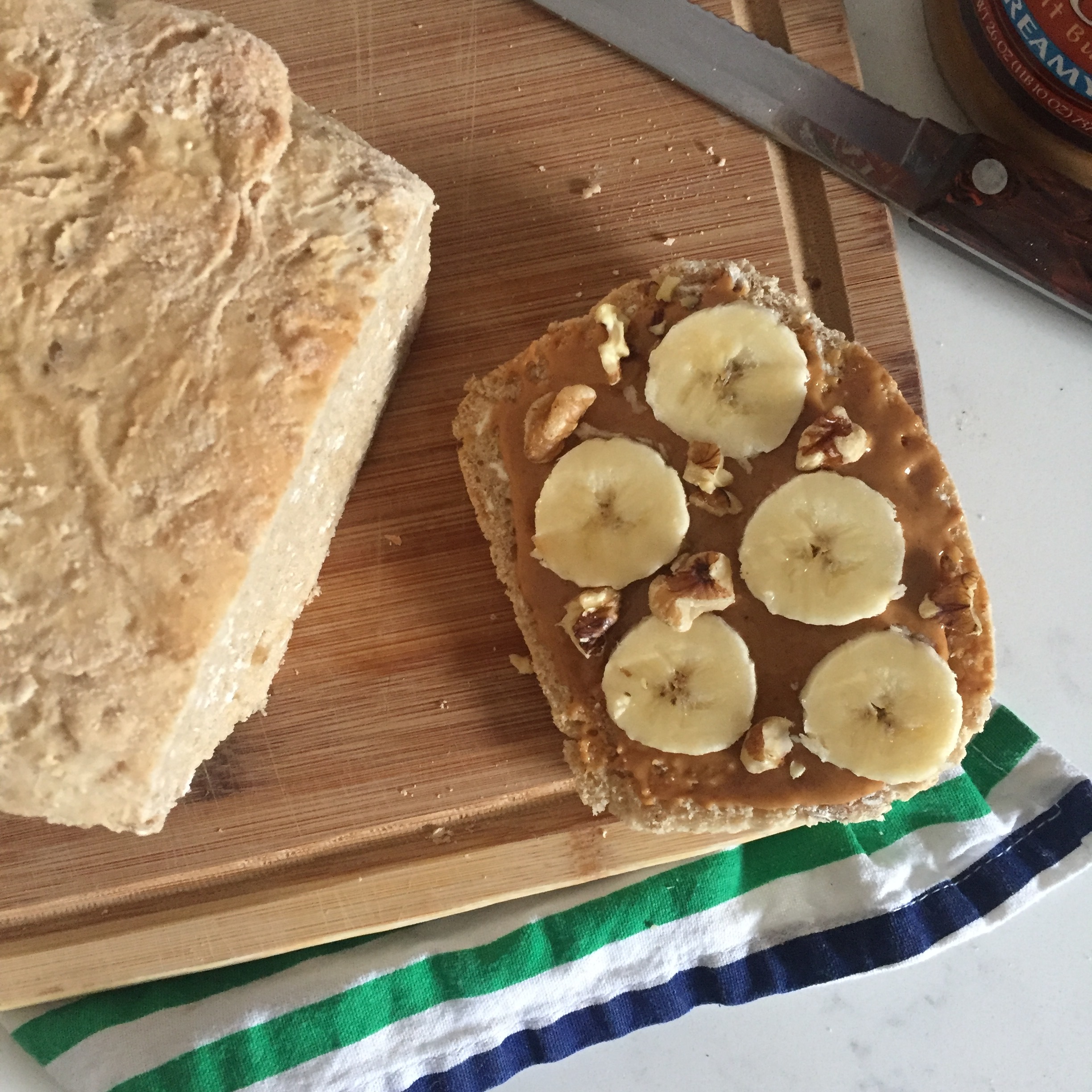
Hello readers! I recently posted an instagram story of a peanut butter and banana sandwich on homemade bread for a snack I was eating (because lately second breakfasts are a much needed thing) and I got several requests for the recipe for the bread. So per your request, I whipped up another batch to take some pictures (and let's be honest--so that I could have it for snacks/meals again this week) and am providing the recipe here!....You're welcome.

In high school, one of my best friend's mom made everything from scratch, including their bread. I mean, she would make their burger buns homemade. Talk about GOALS. And pretty much everyday my friend would pack a peanut butter sandwich on her mom's bread for lunch at school. One weekend I spent time with them and her mom brought me a pb sandwich and I was IN HEAVEN. The bread is dense and chewy and it goes perfectly with peanut butter and banana. And don't get me started on how great it is toasted. I don't know what it is, but it's got the perfect crunch.
I tried making the bread throughout high school, but could never get the dough to rise and I always ended up with a brick. Thankfully I no longer try to make recipes with dense whole wheat flour and sugar free pancake syrup 🙈 (it doesn't work, people). When I got married, my friend's mom was so sweet to give me a bread machine so that I could always make her bread for Isaac and I. Now, I don't actually use the bread machine for this recipe, but that's only because I don't know where the manual is for it and I have no clue which option to choose 😂

So the good news is that you can make this bread in your regular 'ol oven! And it's super fast because you don't have to wait hours for it to rise--instead you just need 20 minutes of rising time (see the recipe instructions below)!
I can't wait to hear about how it turns out for you and what you think!

Maple Oatmeal Bread
Ingredients
- 2 round tsp yeast
- 1 1/8 C warm water (or 1 cup and 2 Tbsp)
- 3 C all purpose flour (I use 2 C AP and 1 cup white whole wheat)
- 1 C old fashioned oats
- 1 tsp salt
- 5 Tbsp maple syrup
- 1 Tbsp neutral oil
Instructions
- Turn oven to 180 and place a shallow dish with 1/2 inch water on bottom rack. Mix yeast in warm water and set aside for 5 minutes. In a mixer with dough attachment hook, add all remaining ingredients, stir to mix, and then add yeast mixture. Mix on low for several minutes. Place in greased loaf pan and place in oven for 20 minutes to allow it to rise. Take loaf and shallow dish out of oven and increase oven to 350. Once it reaches 350, place dough back in oven and cook for 25 minutes. Cool bread before removing from the pan and cutting. Enjoy!